
FLOOD DAMAGE RESTORATION
FLOOD DAMAGE RESTORATION in Austin, TX.
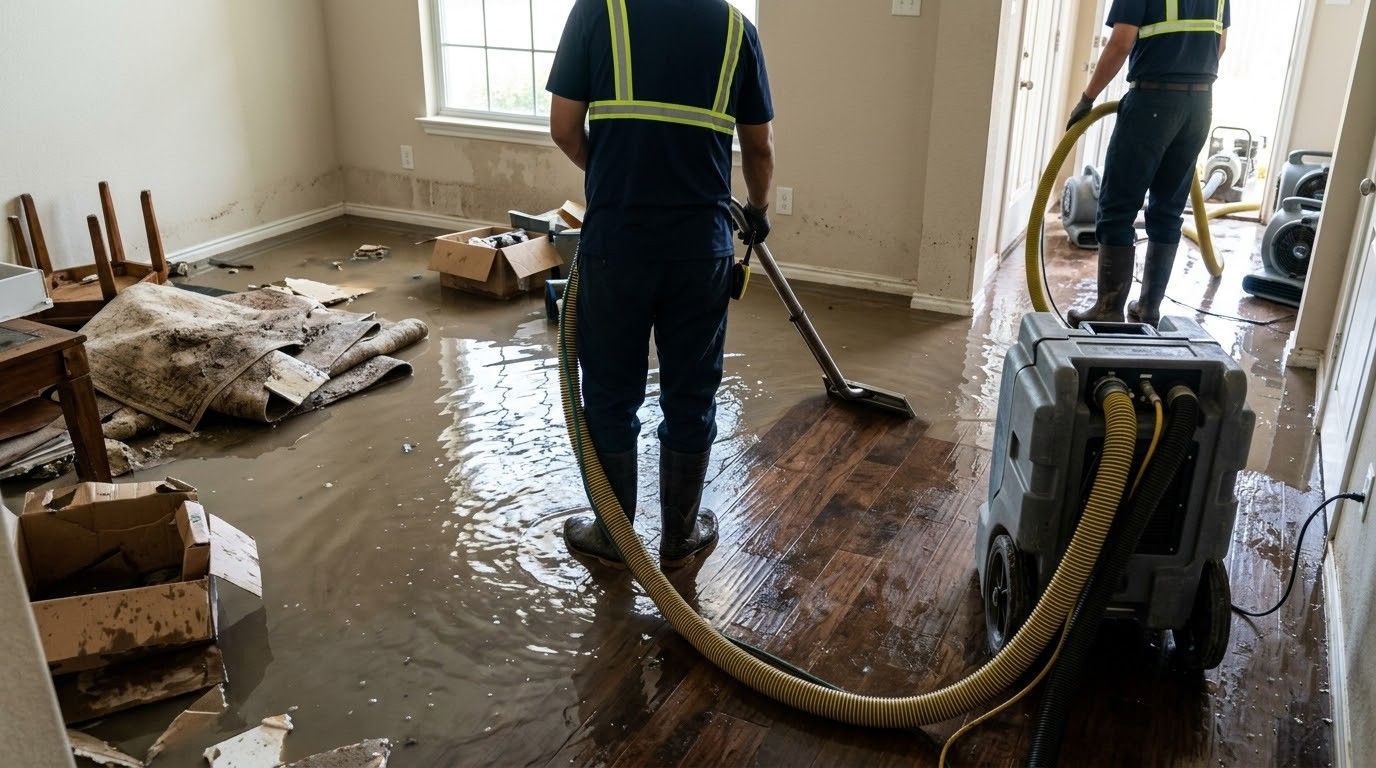
The NOAA Atlas 14 update pushed the 100-year, 24-hour design storm here from 10.2 inches of rain to nearly 13, moving thousands of local structures into a higher risk category than their owners ever knew about. Twin Pillars Restoration provides flood damage restoration in Austin, TX after creek rises, street flooding, and storm water that pushed under doors and across finished slabs. Our IICRC certified technicians treat floodwater as grossly contaminated from the very first minute on site.
FLOODWATER ARRIVES DIRTY AND LEAVES CONTAMINATION BEHIND.
Water from a supply line is clean. Water that crossed a street, a yard, and a threshold is not. It carries soil, fertilizer, fuel residue, and whatever the storm drain held, which puts it in the grossly contaminated category no amount of drying makes safe. Porous material that absorbed it does not get dried and reused, however good it looks once the sun returns.
That single distinction drives the whole project. Removal and sanitizing come before drying, and drying comes before anybody talks about flooring, paint, or new baseboards. Skipping that order is how odor returns later.
- Floodwater extraction and debris removal
- Contaminated material cut out and disposed
- Sanitizing and antimicrobial treatment
- Structural drying verified with meters
FLOOD DAMAGE RESTORATION
WHAT COMES OUT MATTERS AS MUCH AS WHAT DRIES.
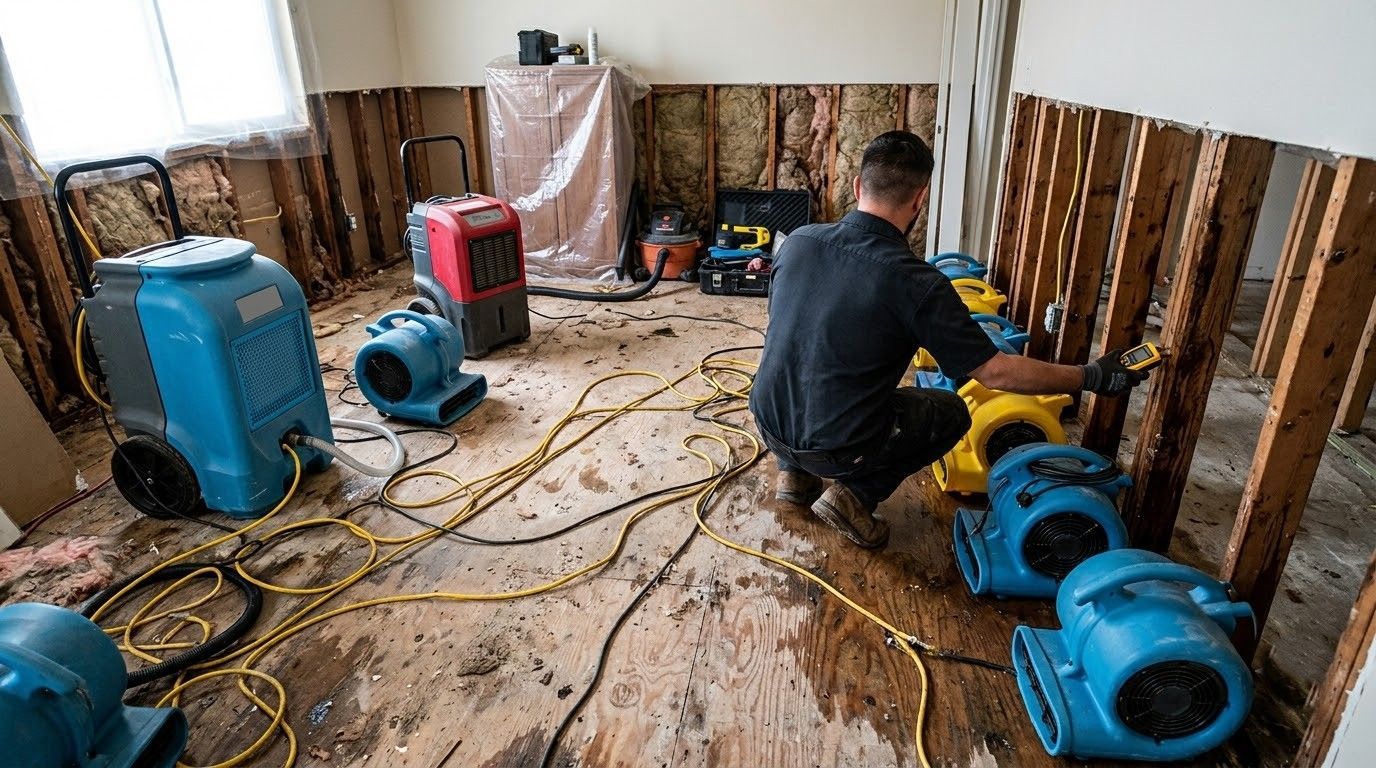
A flooded house is a sorting problem before it is a drying problem. Carpet, pad, insulation, and paper-faced drywall that sat in floodwater leave the building. Framing, concrete, and hard surfaces stay and get cleaned. We cut drywall above the waterline, because moisture climbs inside the cavity well past the visible mark, then we clean and sanitize the structure that remains before drying equipment ever goes in.
FLASH FLOOD ALLEY RUNS STRAIGHT THROUGH OUR SERVICE MAP.
Central Texas holds the most flash-flood-prone ground in the country, where thin soil over limestone sends rainfall into creeks instead of into the earth. Roughly 10 percent of the land inside Austin sits in a floodplain. Onion Creek in 2013, the Memorial Day storms of 2015, and the Hill Country rises of recent summers all put water into houses that had never flooded before.
EVERY MAJOR CENTRAL TEXAS FLOOD TAUGHT US SOMETHING.
Flood work is not water damage with more volume. It is contamination management, disposal logistics, and documentation under a deadline, all while a family is displaced. 15 years of storm response in this region taught us how to sequence a muck-out so the house dries evenly, which materials are worth saving, and how to record a loss the way an adjuster needs to see it. Ready to get your house back?
WHY CHOOSE US FOR FLOOD DAMAGE RESTORATION.
CONTAMINATION TAKEN SERIOUSLY
Floodwater gets handled as grossly contaminated from the start, so nothing porous that soaked in it gets dried and closed back into your walls to cause trouble later.
CUT LINES BASED ON READINGS
Drywall comes out above where moisture actually climbed rather than at a convenient height, which means the cavity behind it dries instead of holding water behind fresh paint.
DEBRIS GONE, NOT PILED
Removed material is bagged, hauled, and documented as the work proceeds, so your driveway does not become a month-long reminder of the worst week of your year.
SANITIZED BEFORE DRYING
Cleaning and antimicrobial treatment happen while surfaces are still accessible, which is far more effective than trying to address contamination after everything has been closed up.
A CLAIM THAT MAKES SENSE
Flood coverage and homeowners coverage rarely overlap neatly, so we document the source, the water line, and every removed material to keep the paperwork straight from the beginning.
ONE CREW THROUGH REBUILDING
The same people who gutted the room hang the drywall, set the trim, and lay the flooring, so recovery does not stall while you audition contractors for the second half.
Lorem ipsum dolor sit amet, consectetur adipiscing elit. Sed do eiusmod tempor incididunt ut labore et dolore magna aliqua. Ut enim ad minim veniam, quis nostrud exercitation ullamco laboris nisi ut aliquip ex ea commodo consequat.
Insert Title
Insert Title

Lorem ipsum dolor sit amet, consectetur adipiscing elit. Sed do eiusmod tempor incididunt ut labore et dolore magna aliqua. Ut enim ad minim veniam, quis nostrud exercitation ullamco laboris nisi ut aliquip ex ea commodo consequat.
Lorem ipsum dolor sit amet, consectetur adipiscing elit. Sed do eiusmod tempor incididunt ut labore et dolore magna aliqua. Ut enim ad minim veniam, quis nostrud exercitation ullamco laboris nisi ut aliquip ex ea commodo consequat.
WHAT WE RESTORE
OUR FLOOD DAMAGE RESTORATION WORK.
Storm water reaches a house from the yard, the street, the roof, and occasionally the sewer, and each route leaves a different mess. Here is how we handle flood losses for Austin homeowners and property managers.
MUCK-OUT
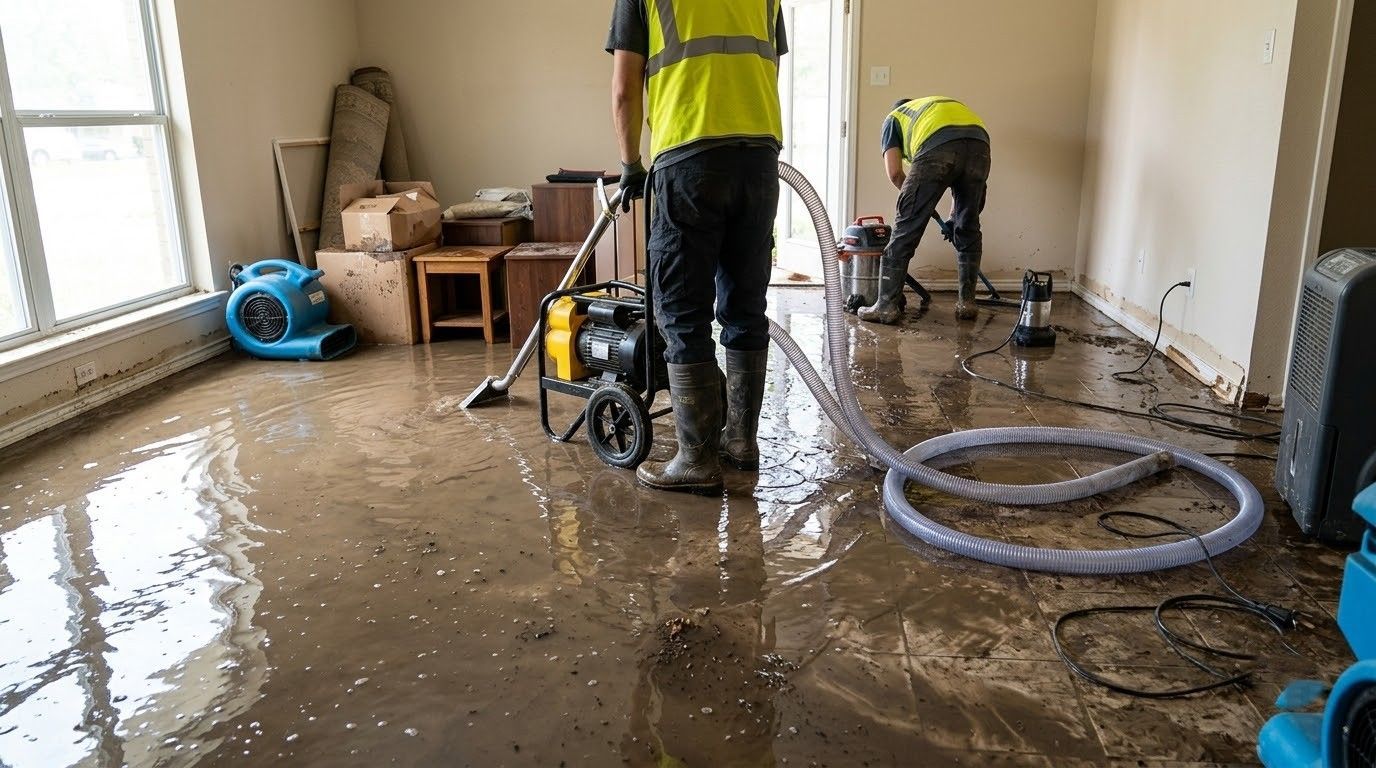
Floodwater Extraction and Debris Removal
Pumps and extractors clear the standing water, then mud, silt, and soaked contents come out. The house has to be emptied of what the flood ruined before any meaningful assessment can happen.
WHAT STAYS
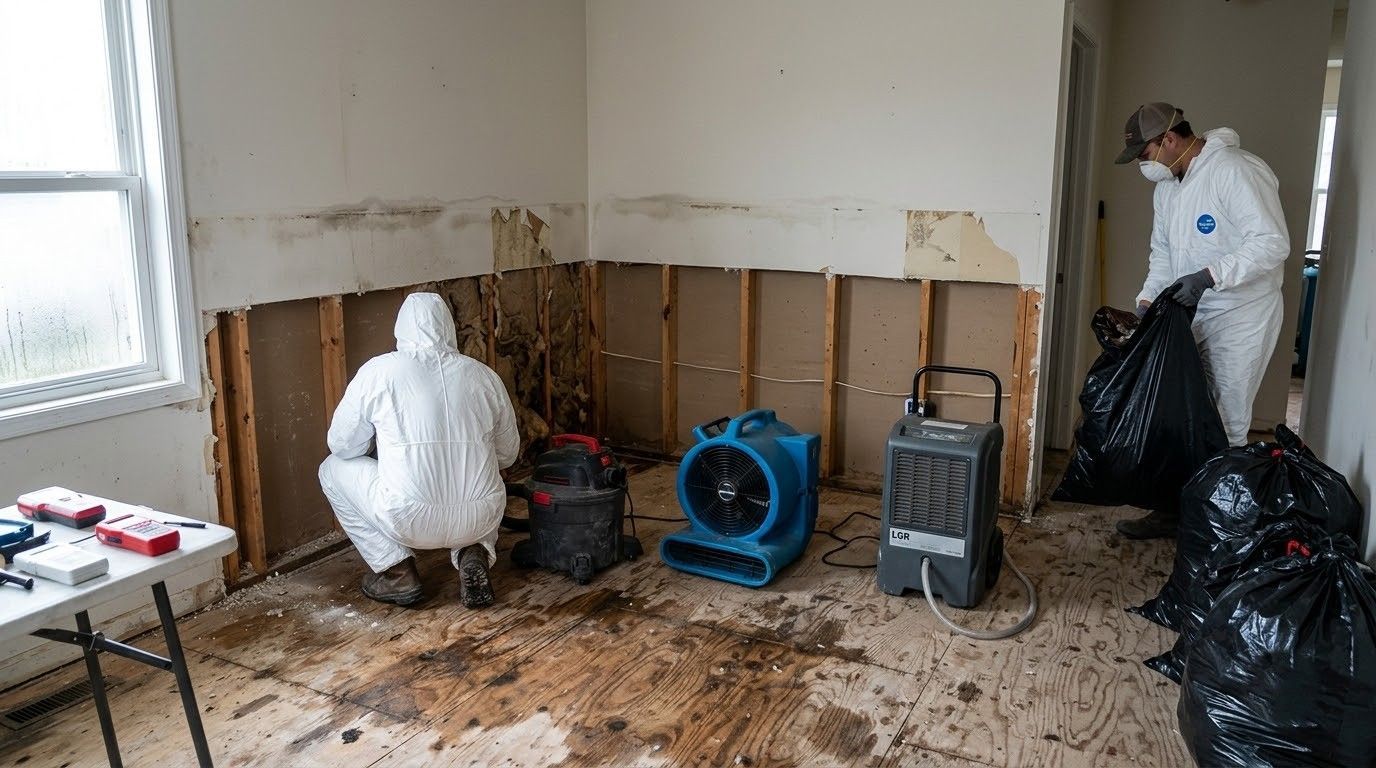
Contaminated Material Removal
Carpet, pad, insulation, and drywall that absorbed floodwater are cut out above the moisture line and disposed of properly. What remains is structure, and structure gets cleaned rather than replaced.
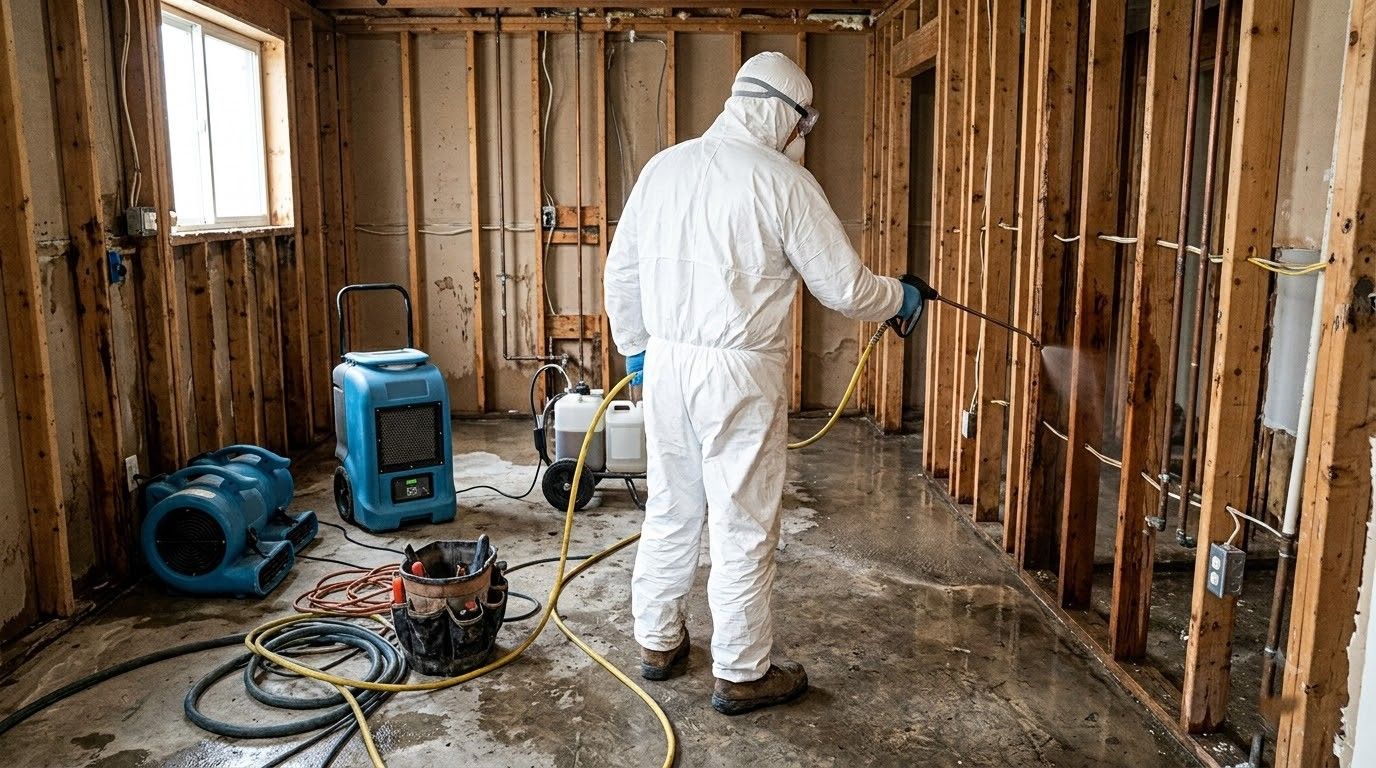
SANITIZE
Cleaning and Antimicrobial Treatment
Exposed framing, slab, and hard surfaces are cleaned and treated while everything is still open and reachable. This is the step that decides whether the rebuilt room smells right in August.
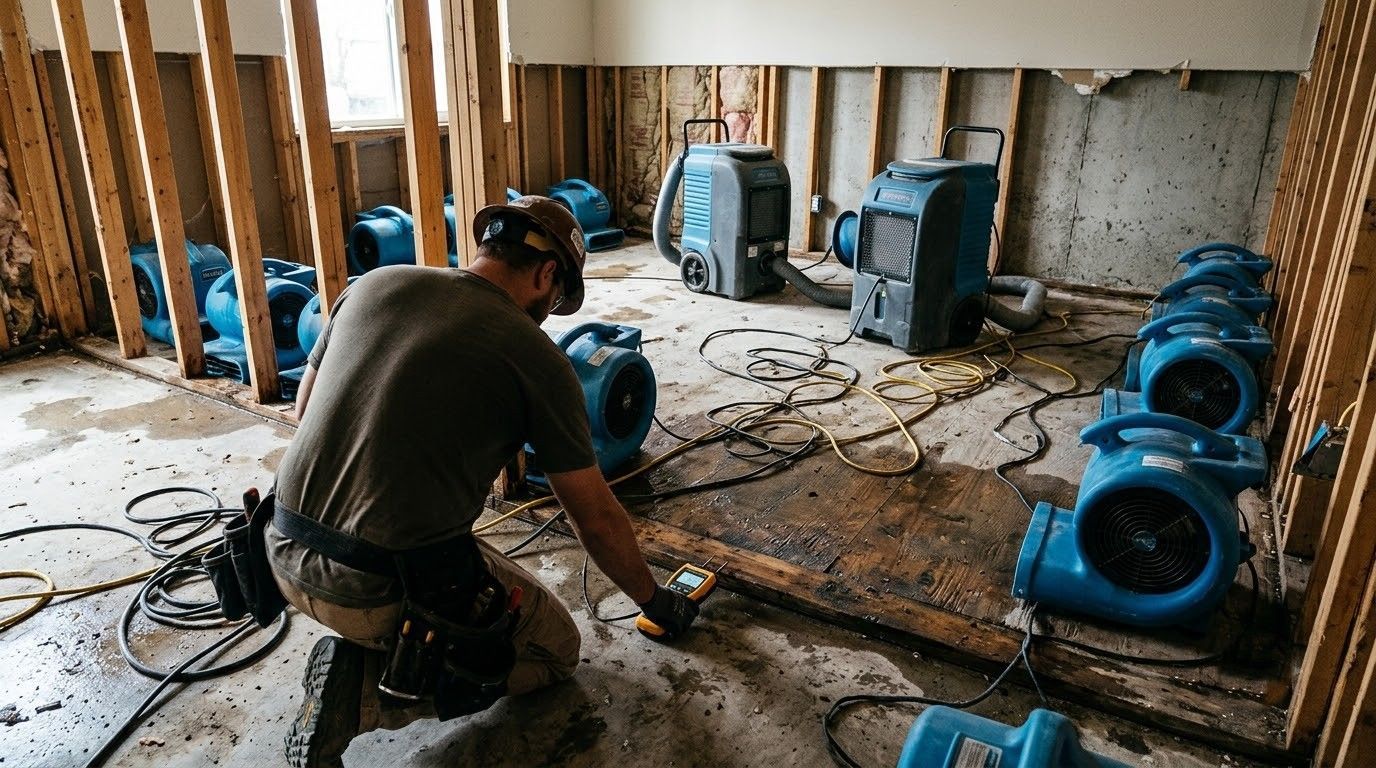
STRUCTURE
Structural Drying After Flooding
Air movers and dehumidifiers dry framing, slab, and subfloor to documented readings, with equipment adjusted daily. Concrete and lumber release moisture slowly, so flood drying usually runs longer than a plumbing loss.
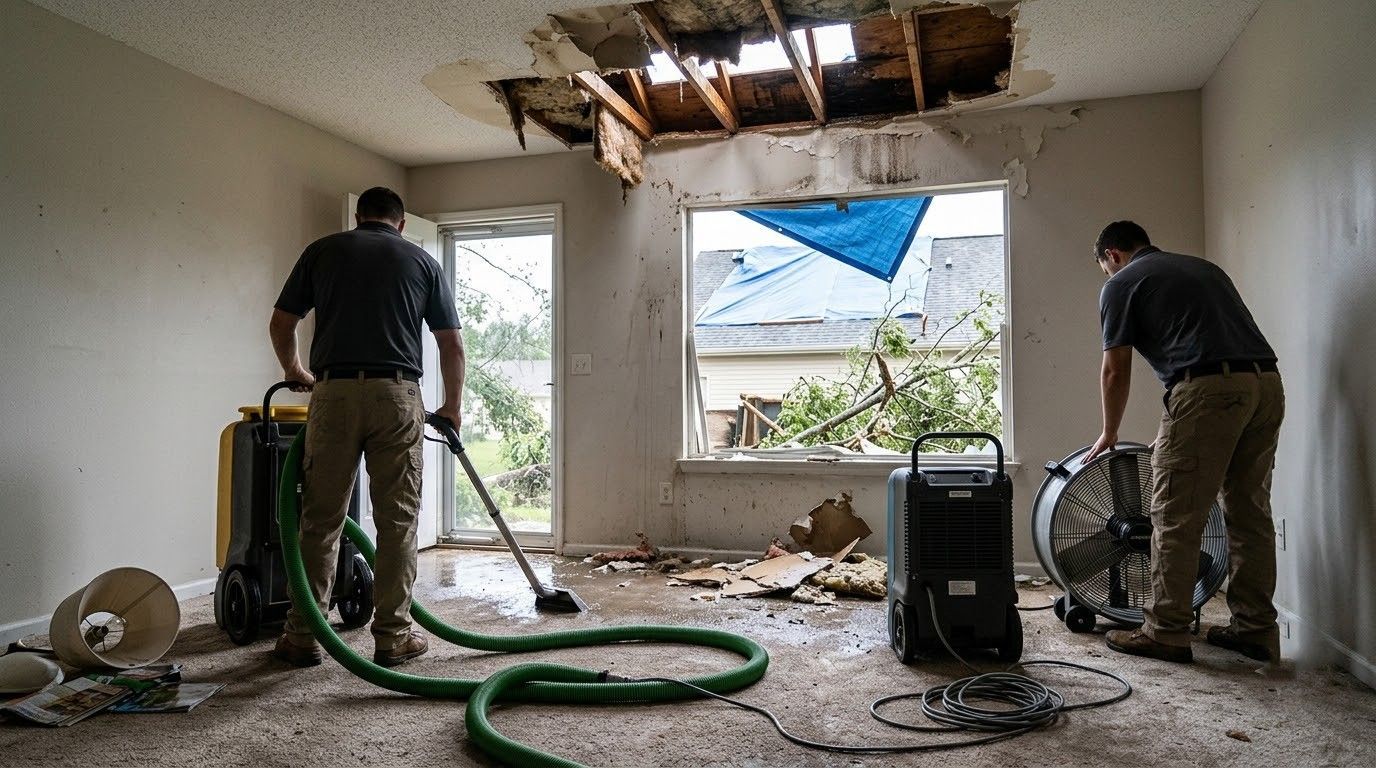
STORM SIDE
Storm and Roof Damage Water Cleanup
Wind driven rain, failed roofs, and blown out windows put water in from above rather than below. We tarp the opening, extract, dry the affected ceilings, and coordinate the roof repair afterward.
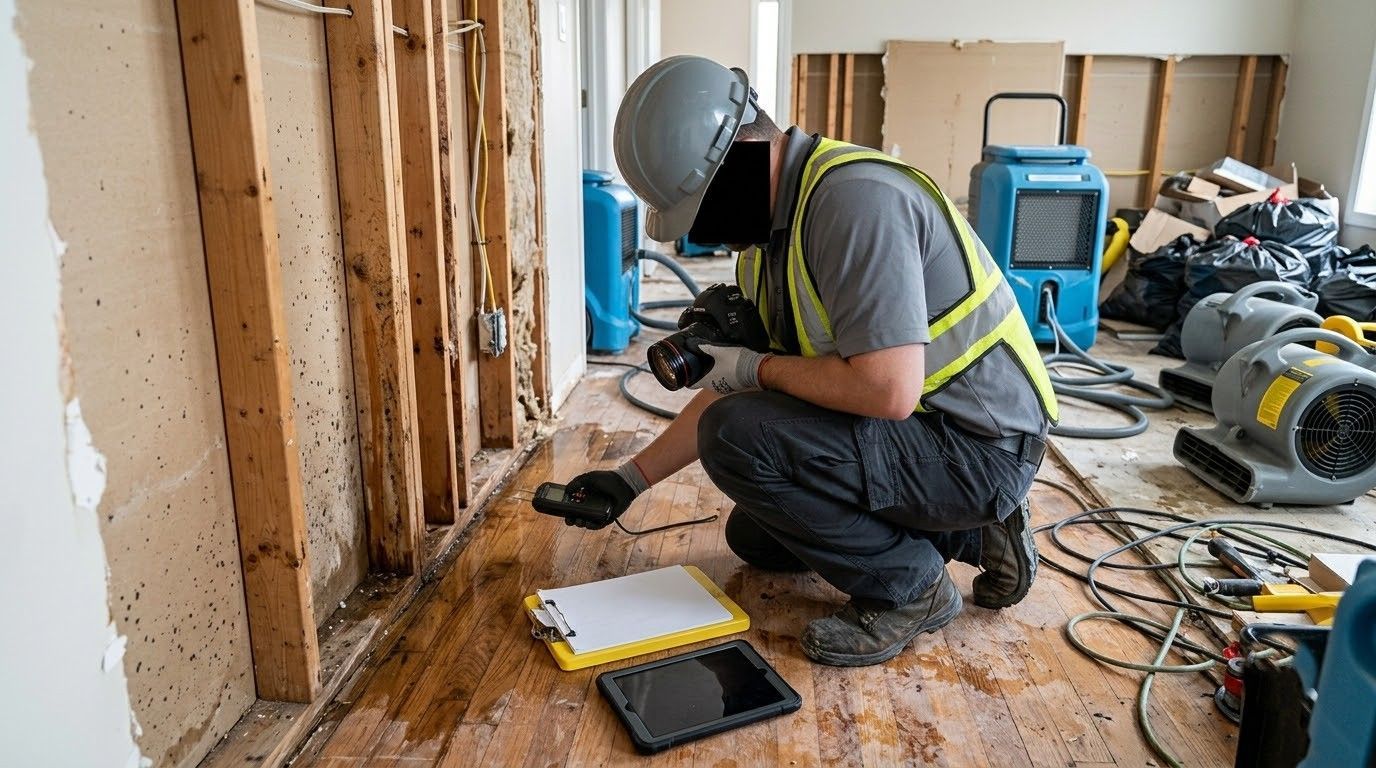
PAPERWORK
Flood Documentation for Your Claim
Photographs before removal, a logged inventory of what left the property, moisture readings, and a written scope give your adjuster a complete record that matches the work actually performed on the property.
THE WORD ON OUR WORK
WHAT OUR CLIENTS SAY.
After major water damage, one family wrote that we showed up fast, handled everything, and made a genuinely stressful situation easier to carry. They mention fair pricing with no hidden surprises, and a house left spotless when the last crew drove away.
Common Questions
FREQUENTLY ASKED QUESTIONS.
Flooding raises questions about safety, coverage, and what can be saved, usually while the water is still in the room. These answers cover the first day and the weeks after.
What to do in the first 24 hours after a home flood?
Stay out until the structure and power are confirmed safe, then photograph everything before touching it. Contact your insurer, then call for emergency extraction. Removing standing water and soaked material quickly is what protects the framing and subfloor underneath.
Is it safe to stay in a flooded house?
Usually not while water remains. Electrical hazards, contaminated water, and weakened ceilings make an occupied flooded home genuinely risky, and airborne contamination rises quickly once warm, wet material starts sitting. Wait for an assessment before going back inside.
How long does it take to dry a flooded house?
Longer than a plumbing loss, commonly a week or more once material has been removed. Concrete, framing, and plaster release moisture slowly, so drying continues until the meters confirm it rather than until a schedule says it should.
When is water damage considered flood damage?
When water reaches your home from outside, across the ground, rather than from a failed component inside it. Twin Pillars Restoration documents that distinction carefully on every Austin, TX loss, because insurance coverage turns entirely on that one distinction.
Does homeowners insurance cover flood damage?
Not in Texas, it does not. A homeowners policy covers sudden, accidental water from inside the house, while rising water from outside requires separate flood insurance, which carries a 30-day waiting period before the policy takes effect at all.
Can my hardwood floors be saved after a flood?
Sometimes, when the water was clean and drying started immediately. Boards that sat in contaminated floodwater are typically removed, since the subfloor beneath them needs cleaning and the wood itself cannot be properly sanitized. Speed decides most of it.
What happens if your house floods and you don't have flood insurance?
Recovery becomes an out-of-pocket project, sometimes supported by federal disaster assistance after an official declaration. Twin Pillars Restoration scopes work in stages for Austin, TX homeowners in that position, prioritizing safety, extraction, and structural drying before anything else.
Is commercial flood damage restoration different from residential?
The physics match, but the logistics do not. Commercial losses involve larger volumes, tenant coordination, business interruption pressure, and equipment scaled accordingly, along with documentation that several different parties will eventually review in detail. Scheduling works around business hours.
HOW WE WORK
FROM MUCK-OUT TO A DRY STRUCTURE, HERE IS HOW.
STEP 01
Assess and Make Safe
We check the power, the gas, and structural stability before anyone enters, categorize the water, and photograph the property exactly as we found it. A flooded building stays a hazard until somebody with equipment proves otherwise.
STEP 02
Pump and Extract
Standing water leaves through pumps and extraction units, working from the lowest point outward. Mud and silt follow, because contamination left sitting on a slab keeps reintroducing itself to everything else in the room.
STEP 03
Remove What Cannot Be Saved
Soaked carpet, pad, insulation, and drywall are cut out above the moisture line, bagged, logged, and hauled away. Contents are sorted into salvageable and unsalvageable, with every decision documented in writing for your claim.
STEP 04
Clean and Sanitize
Exposed framing, slab, and hard surfaces are cleaned and treated with antimicrobial products while access is still open. Skipping this step is how a rebuilt flood room quietly develops an odor months later.
STEP 05
Dry to Documented Readings
Air movers and dehumidifiers are placed and balanced, then readings are logged daily until framing and slab reach target moisture content. Flood drying takes a kind of patience that no calendar deadline can rush.
STEP 06
Rebuild the Finished Space
Insulation, drywall, texture, paint, trim, flooring, and cabinetry go back once the structure reads dry. The same crew closes up everything it opened, so the finished room matches the rest of the house.
START YOUR FLOOD RECOVERY
GET AHEAD OF WHAT THE STORM WATER LEFT BEHIND.
A flooded house does not stabilize on its own. Contaminated material keeps breaking down, humidity keeps climbing, and the window for saving framing and flooring closes within a few days. Twin Pillars Restoration responds across Austin, TX with pumps, disposal, sanitizing, and drying, then rebuilds everything the water took from you. Veterans and first responders receive 10% off. Send your details through our contact page and we will get a crew scheduled for you.
WHAT YOUR FLOOD ASSESSMENT COVERS:
- Safety check on power and structure
- The water category and contamination level
- The moisture line inside your walls
- What can be saved and what leaves
- A drying plan with target readings
- Photographs and logs for your claim