
WATER DAMAGE RESTORATION
WATER DAMAGE RESTORATION in Austin, TX.
The EPA puts the safe drying window for wet building materials at 24 to 48 hours, and Austin humidity does nothing to widen it. Twin Pillars Restoration provides water damage restoration in Austin, TX for burst supply lines, failed water heaters, appliance overflows, and roof leaks that soaked insulation weeks before a ceiling ever stained. Our IICRC certified technicians map moisture with meters and thermal imaging, then dry framing, subfloor, and flooring back to documented readings instead of estimates.
A LEAK YOU CANNOT SEE IS STILL SOAKING THE FRAME.
Most of the water in a household loss is never visible. It runs along the top plate, drops into wall cavities, and wicks upward through drywall at roughly an inch each hour. By the time paint bubbles or a baseboard cups, the cavity behind it has been wet for days and the insulation inside is holding moisture.
That is why we open walls based on readings rather than appearances. Cutting where the meter says water actually traveled keeps demolition small and keeps dry material where it belongs, which is inside your house.
- Thermal imaging and moisture mapping
- Water extraction and structural drying
- Antimicrobial treatment where contamination exists
- Documentation your insurance claim can use
WATER DAMAGE RESTORATION
DRYING IS A MEASUREMENT, NOT A GUESS.
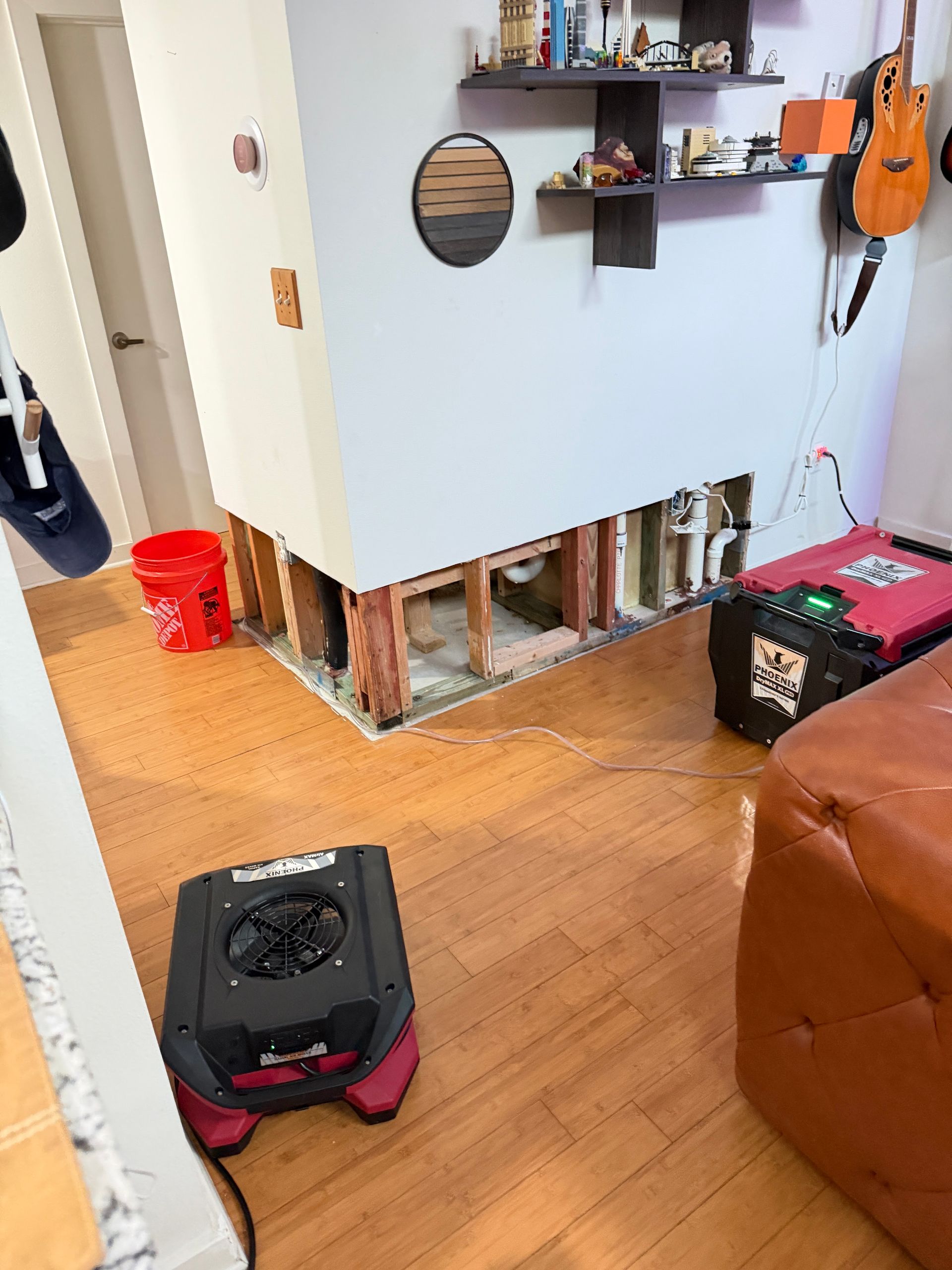
Equipment placement is arithmetic. The amount of wet material decides how many air movers a room needs, and the moisture load decides the dehumidifier. We record temperature, relative humidity, and material moisture at setup, then compare every day against that baseline. Framing has to reach 6 to 9 percent and drywall has to fall under half a percent before equipment leaves. When a number stalls, we change the approach rather than the deadline.
SLAB FOUNDATIONS HIDE WATER LONGER THAN YOU THINK.
Most Austin houses sit on slab, so water spreads sideways beneath flooring instead of draining away anywhere. Engineered wood cups, laminate swells along the seams, and tile can look untouched while the thinset underneath stays saturated for weeks. Add attic air handlers and morning humidity that averages 83 percent, and drying a Central Texas house takes controlled conditions rather than open windows.
15 YEARS OF READING MOISTURE METERS EVERY DAY.
Experience in this trade is mostly pattern recognition. After 15 years of Central Texas water losses, we know which wall a dishwasher line soaks first, how far a second-floor tub overflow travels, and when a stain three rooms away belongs to the same failure. That knowledge shortens the search, narrows the demolition, and keeps the drying plan honest. Would you rather guess about your walls or know?
WHY CHOOSE US FOR WATER DAMAGE RESTORATION.
AHEAD OF THE MOLD CLOCK
Extraction and airflow starting the same day keep materials inside that 24- to 48-hour window, which is the difference between drying your drywall and replacing it next month.
LESS DEMOLITION, LESS REBUILD
Cutting to the moisture line rather than to a comfortable guess leaves more of your finished space intact, so the repair phase stays small and the house looks like itself sooner.
PROOF FOR YOUR CLAIM
Daily readings, photographs, and a written scope give an adjuster something concrete to evaluate, which tends to move a claim along faster than a description of how a room looked.
A CLEAN, CONTAINED WORKSITE
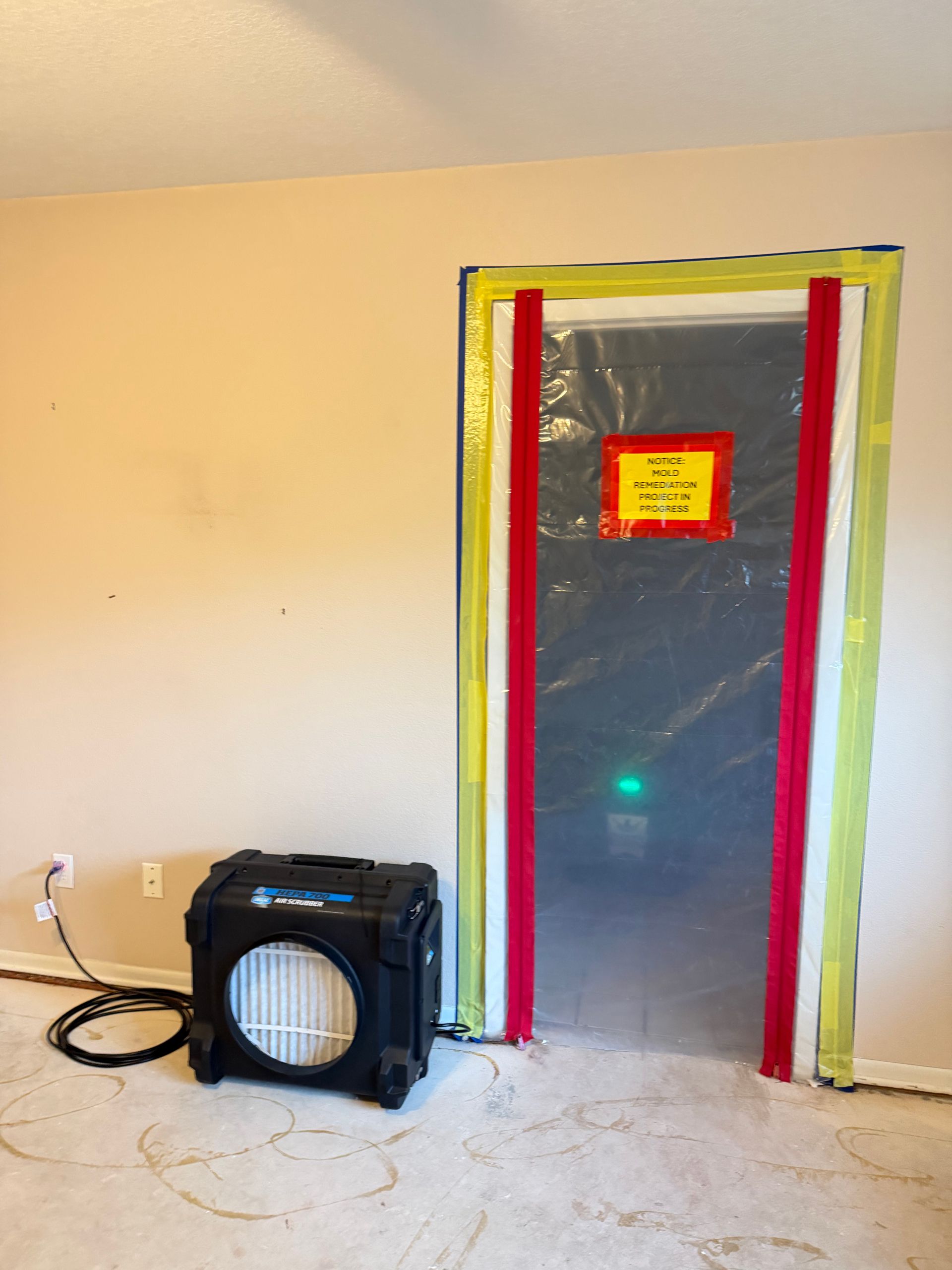
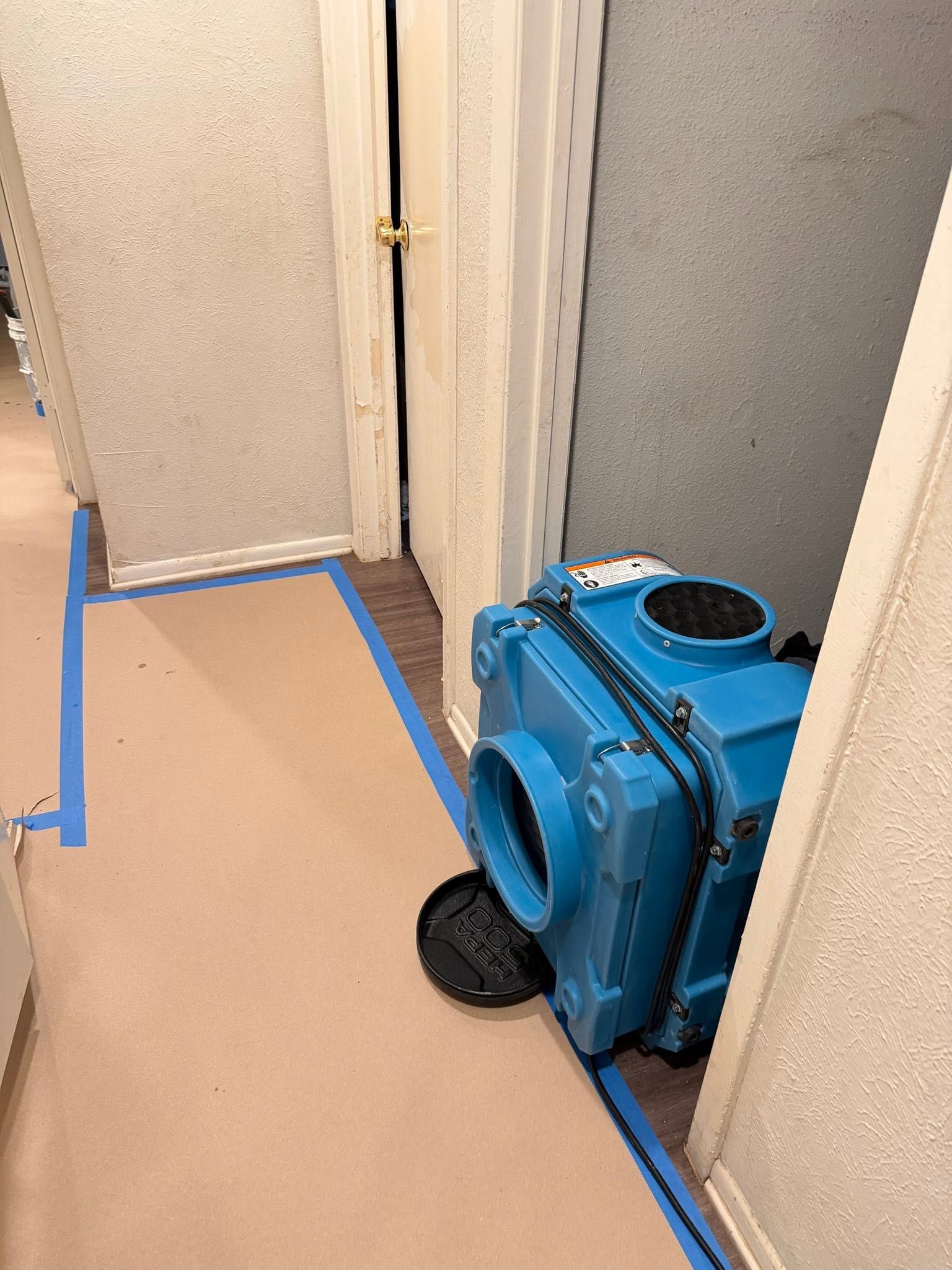
Plastic containment, floor protection, and equipment kept out of walkways mean the rest of the house stays usable while one area dries, and the cleanup never becomes your project.
ONE TEAM THROUGH THE REPAIRS
The crew that dried the structure also puts back the drywall, trim, and flooring, so nothing gets lost in a handoff between a mitigation company and some unfamiliar contractor.
SOMEONE ANSWERS AT 2 A.M.
Water losses rarely begin during business hours. A call at any hour reaches a technician who can dispatch, not a service that takes a message and returns it sometime after the weekend.
Lorem ipsum dolor sit amet, consectetur adipiscing elit. Sed do eiusmod tempor incididunt ut labore et dolore magna aliqua. Ut enim ad minim veniam, quis nostrud exercitation ullamco laboris nisi ut aliquip ex ea commodo consequat.
Insert Title
Insert Title

Lorem ipsum dolor sit amet, consectetur adipiscing elit. Sed do eiusmod tempor incididunt ut labore et dolore magna aliqua. Ut enim ad minim veniam, quis nostrud exercitation ullamco laboris nisi ut aliquip ex ea commodo consequat.
Lorem ipsum dolor sit amet, consectetur adipiscing elit. Sed do eiusmod tempor incididunt ut labore et dolore magna aliqua. Ut enim ad minim veniam, quis nostrud exercitation ullamco laboris nisi ut aliquip ex ea commodo consequat.
WHAT WE DRY
OUR WATER DAMAGE RESTORATION WORK.
Water reaches a house through a dozen different failures, and every one of them leaves a different drying problem behind. These are the situations we handle most often for Austin homeowners, from a slow supply line to a saturated second floor.
HIDDEN WATER
Moisture Detection and Mapping
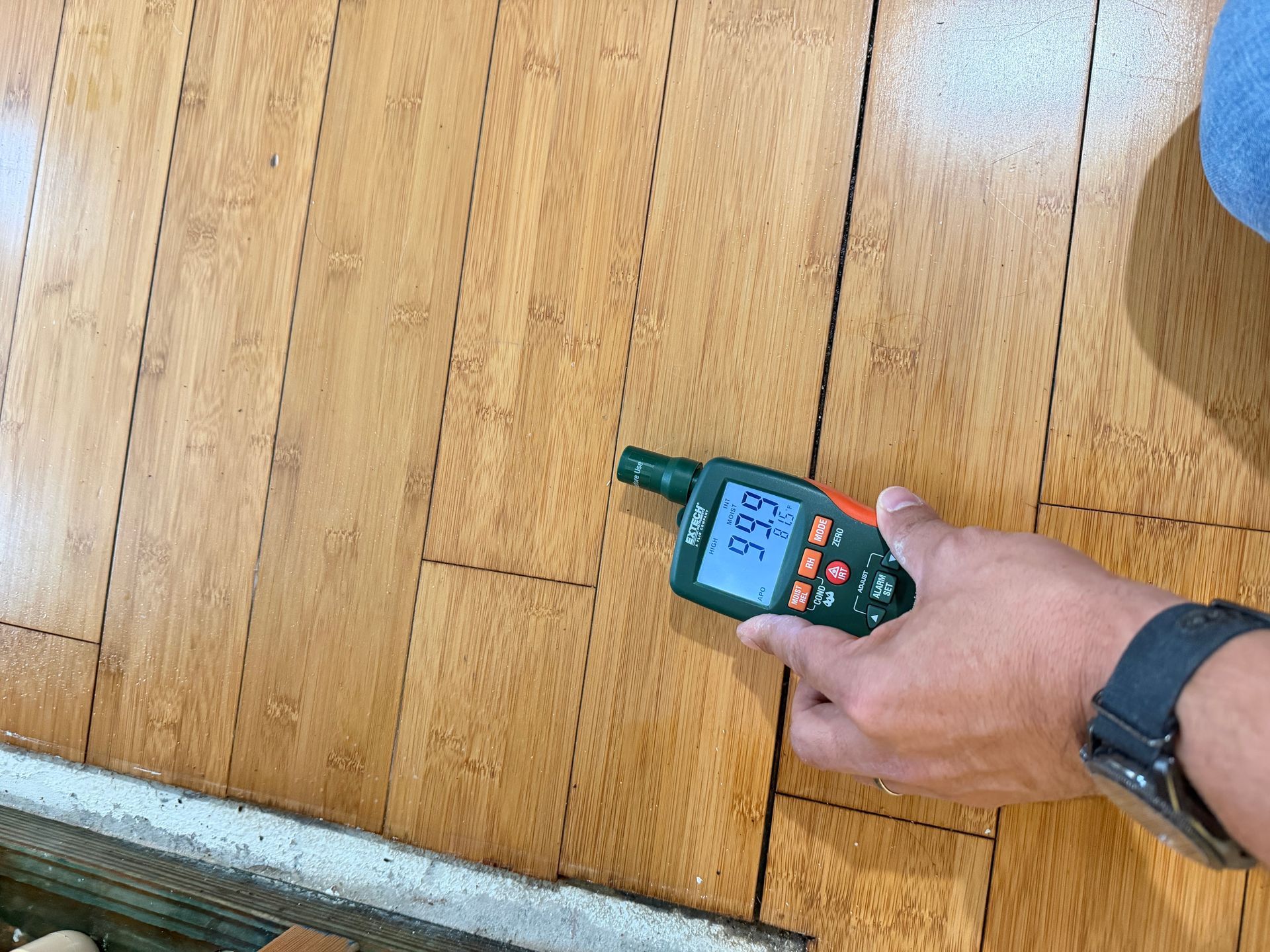
Meters, probes, and thermal imaging show where water traveled behind finishes before anything gets cut open. The map produced at that stage decides the demolition line, the equipment count, and what gets rechecked on day three.
SUPPLY LINES
Burst Pipe and Plumbing Leak Cleanup
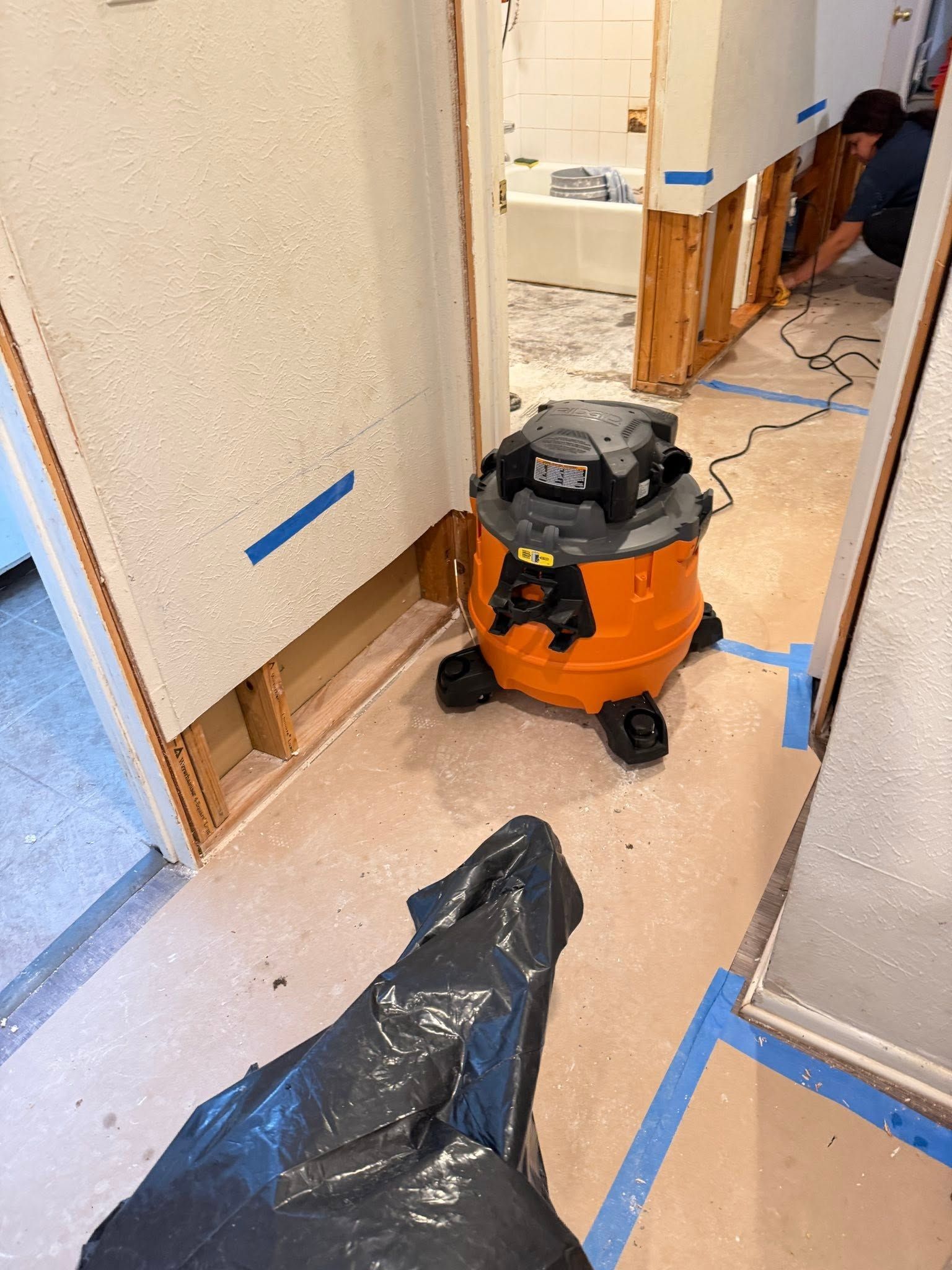
Failed supply lines, split copper after a freeze, and slow joint leaks under cabinets all release clean water that turns contaminated as it sits. We extract, remove saturated cabinet bases, and dry the cavity behind them.
APPLIANCES
Appliance Overflow Cleanup
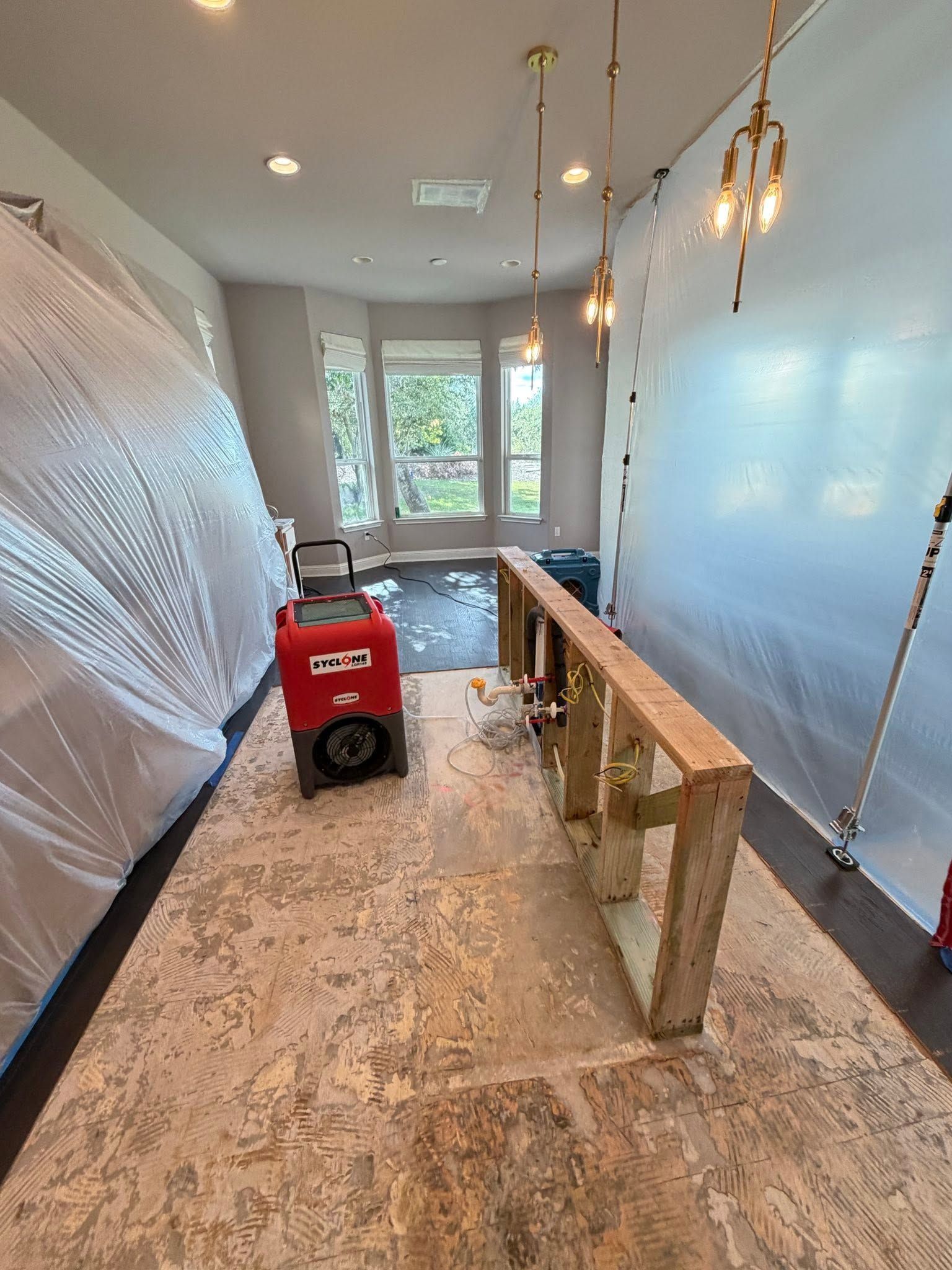
Dishwashers, ice makers, washing machines, and water heaters fail quietly and usually overnight. We lift affected flooring where needed, dry subfloor and framing, and check adjoining rooms, since these losses spread much further than the puddle suggests.
STRUCTURE
Structural Drying and Dehumidification
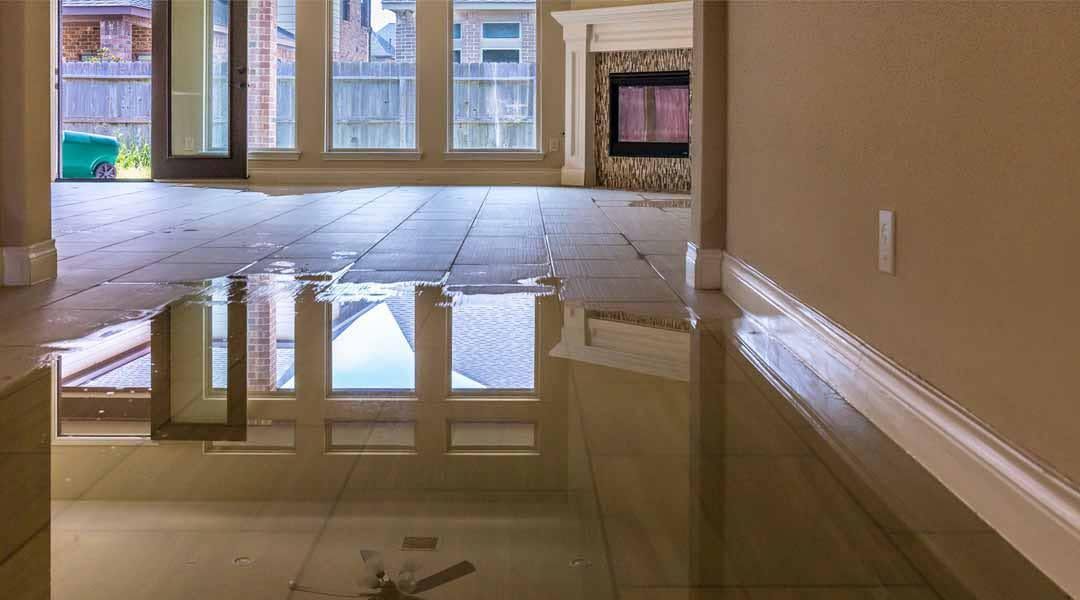
Air movers create evaporation and dehumidifiers remove what evaporates, and the balance between the two decides how quickly a structure dries. Equipment is sized to the wet area, repositioned daily, and pulled only when readings clear.
CEILINGS
Roof Leak and Ceiling Water Damage
Water almost never enters a roof at the point where it drips through a ceiling. We trace the entry, remove saturated insulation, dry the framing above, and repair the ceiling once that cavity reads dry.
FLOORING
Wet Carpet, Pad, and Hardwood Drying
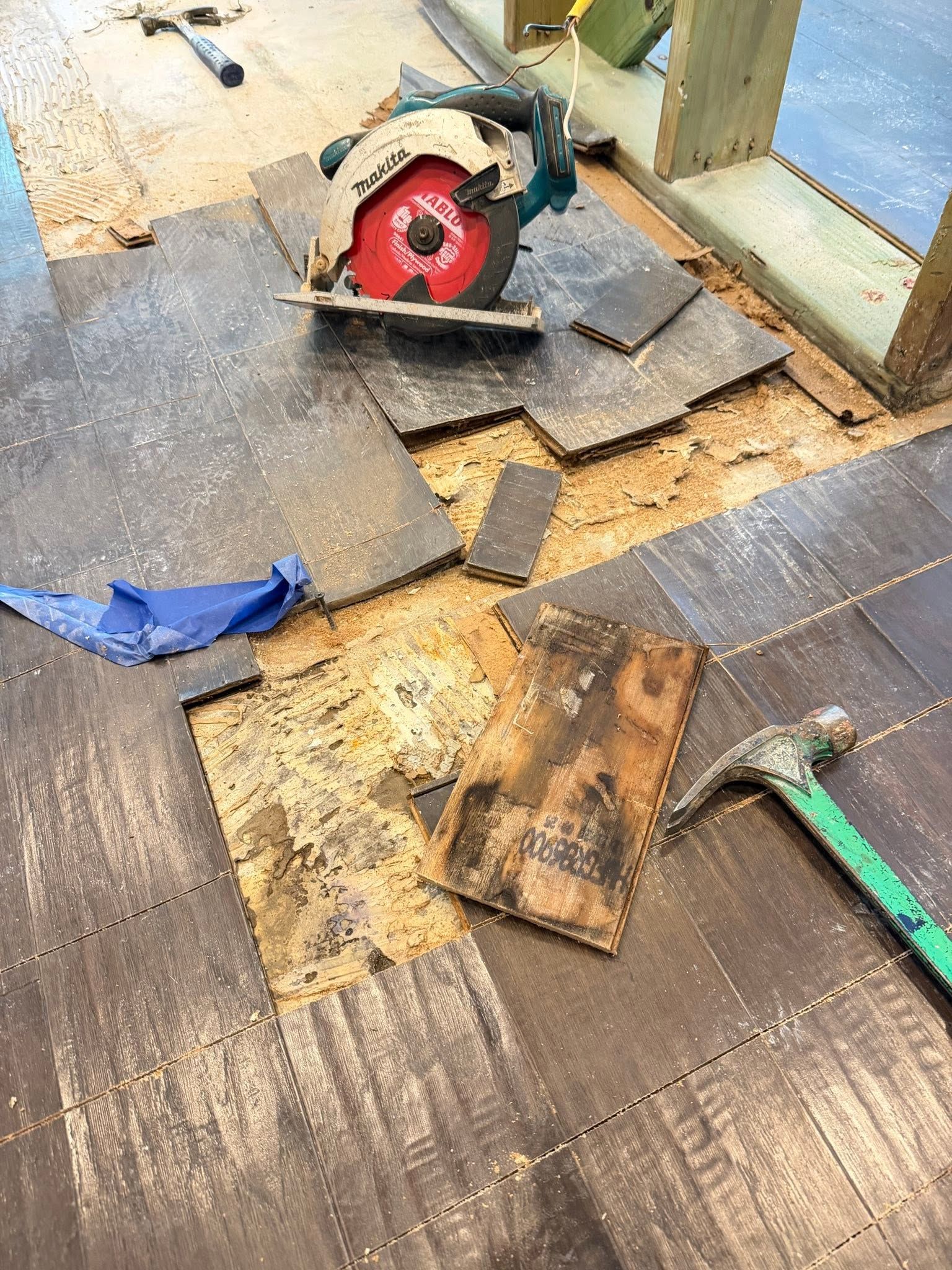
Pad holds far more water than the carpet above it, and hardwood cups long before it ever dries flat again. We extract, say honestly what is salvageable, and use floor drying systems where the wood can be saved.
THE WORD ON OUR WORK
WHAT OUR CLIENTS SAY.
One family lost a kitchen to a dishwasher flood and needed flooring, an island, and several rooms rebuilt afterward. What they mention in their review is not the equipment. It is that we stayed responsive, kept the schedule honest, and never turned a change order into a surprise.
Common Questions
FREQUENTLY ASKED QUESTIONS.
Water losses move quickly, and the questions homeowners ask usually arrive faster. These cover timelines, what dries and what gets replaced, and how drying is verified before a wall closes.
What is the process for water damage restoration?
Inspection and moisture mapping, source control, bulk water extraction, structural drying with monitored equipment, then repairs. Antimicrobial treatment gets added when the water was contaminated. Every phase is documented, so nothing closes up before the readings actually support it.
How long does water damage restoration take?
Drying usually runs 3 to 5 days on a moderate loss, and longer for hardwood, plaster, or masonry that releases moisture slowly. Repairs follow once readings clear, and that part of the timeline depends on which materials are being replaced.
Can I stay in my home during water damage restoration?
Often yes, provided the affected area can be contained and the utilities are safe. Equipment runs loud and warm, and contaminated water changes the answer. Twin Pillars Restoration tells Austin, TX homeowners honestly which situation applies to their home.
What are the categories of water damage?
Category 1 is clean water from a supply line, Category 2 carries significant contamination such as washing machine discharge, and Category 3 is grossly contaminated, including sewage and floodwater. Clean water degrades into the higher categories over time.
How do I know if water damage is serious?
Softness underfoot, a musty smell, cupped flooring, stains that grow between visits, and a sagging ceiling all signal more water than the surface shows. Twin Pillars Restoration settles that question with meter readings in minutes across Austin, TX.
Do I need to replace my drywall if I can dry it out?
Not necessarily. Drywall showing no swelling, with seams still intact, can often be dried in place and saved. Once the board has crumbled, delaminated, or held water past 2 full days, replacement becomes the far more reliable path.
How can I tell if there is water damage behind my walls without opening them?
Thermal imaging reveals the temperature differences where moisture sits, and pin or pinless meters confirm what the camera suggests. Together they map the whole wet area without cutting, which is exactly why an inspection always precedes demolition here.
Should I contact my insurance when dealing with water damage?
Yes, and early. Sudden and accidental water damage is generally covered in Texas, while gradual seepage usually is not. Photographs and daily moisture readings give your adjuster something measurable to work from, rather than a verbal description of the room.
HOW WE WORK
FROM FIRST CALL TO FINAL READING, HERE IS HOW.
STEP 01
Take Your Call and Dispatch
Someone answers at any hour, gathers what is happening, and walks you through shutting off water safely. A technician heads out immediately after that, because response time decides how much material can still be saved.
STEP 02
Find and Stop the Source
Nothing dries while water keeps arriving. We locate the failure, isolate the supply line or the entry point, and confirm the leak has genuinely stopped before a single piece of drying equipment gets placed.
STEP 03
Map Every Wet Material
Meters and thermal imaging define the wet perimeter room by room, including cavities and subfloor. That map becomes the working scope, the equipment count, and the baseline that every later reading gets compared against.
STEP 04
Extract and Set Equipment
Pumps and extraction units remove bulk water, saturated pad and unsalvageable material come out, then air movers and dehumidifiers go in at counts matched to the size of the wet area and the moisture load.
STEP 05
Monitor Until Readings Clear
We return daily, log temperature, humidity, and material moisture, and move equipment as the wet area shrinks. Drying gets declared finished by the numbers, never by the calendar or by how a room feels.
STEP 06
Rebuild and Reinstate
Insulation, drywall, texture, paint, trim, and flooring go back once the structure reads dry. The same team finishes the repair work, so the room matches what stood there before the water ever arrived.
GET YOUR MOISTURE INSPECTION
EVERY HOUR YOU WAIT COSTS MORE THAN THE CALL DOES.
Water damage is one of the few household problems that gets measurably more expensive by the hour, and the bill lands in demolition rather than in labor. Twin Pillars Restoration responds across Austin, TX at any hour with extraction pumps, drying equipment, and a written scope you see before work begins. Veterans and first responders receive 10% off every project. Reach us through our contact page and we will schedule your moisture inspection today.
WHAT YOUR INSPECTION COVERS:
- A thermal scan of the affected rooms
- Meter readings on framing and flooring
- The likely source of the water
- What can dry and what must be replaced
- A written scope with photographs
- Documentation your adjuster can use