Signs of Hidden Water Damage Behind Walls You Shouldn't Ignore
September 30, 2026
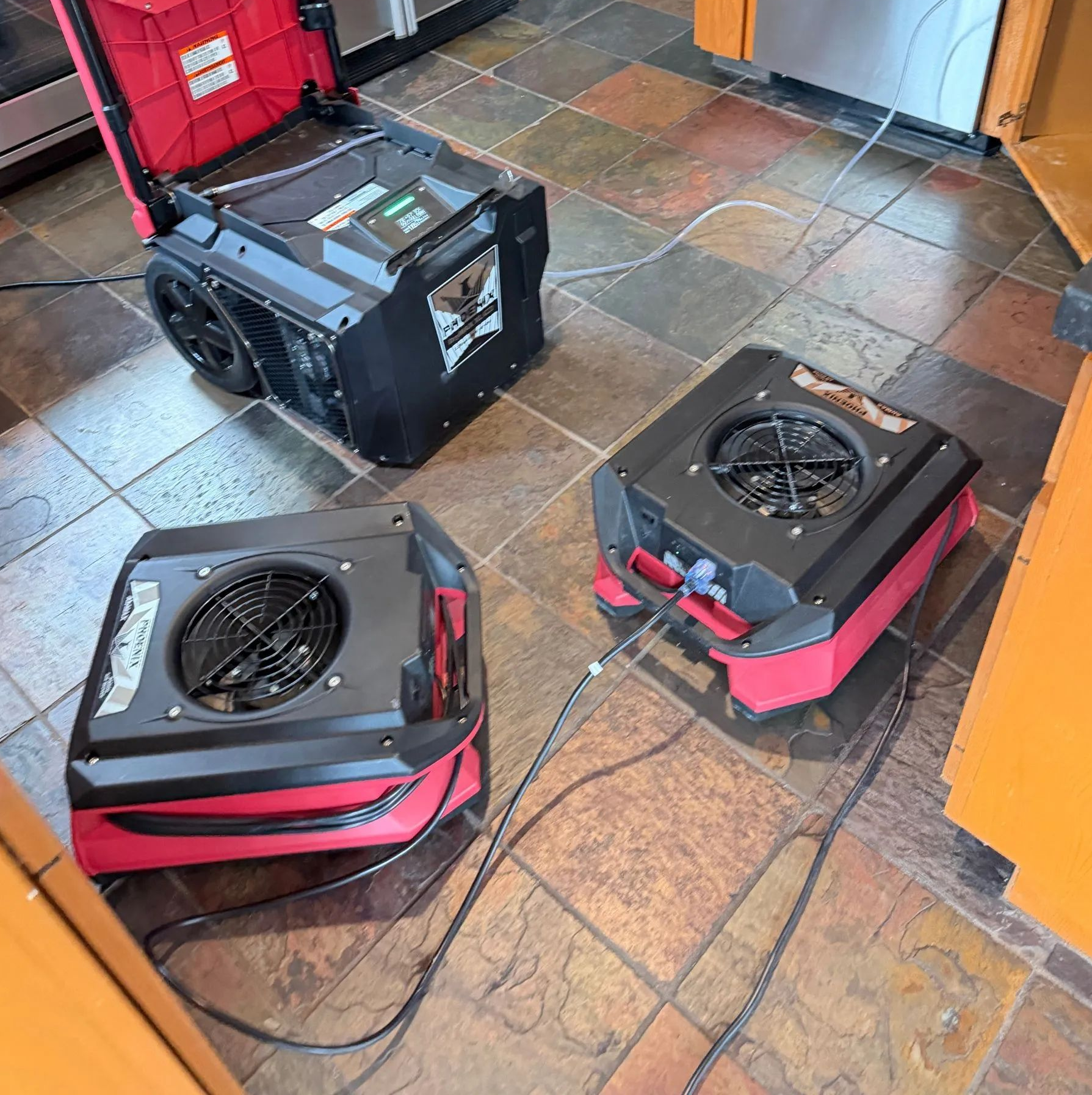
QUICK ANSWER: Hidden water damage behind a wall usually shows up as a musty smell, a soft or spongy patch when you press on the drywall, paint that bubbles without a visible leak nearby, or a stain that keeps growing between visits. Baseboards pulling away from the wall and flooring that feels cool or damp near an exterior wall are two more clues people miss. None of these signs alone tell you how bad the damage is. A moisture meter and a thermal imaging camera can map what's happening inside the cavity without opening it up, which is the fastest way to find out if you're looking at a quick dry out or a larger repair.
A dishwasher line let go under a cabinet three weeks before anyone noticed the toe kick had gone soft. By then the water had already traveled along the subfloor, up the back of the cabinet box, and into the wall behind the sink. The homeowner smelled it before they saw anything. That's how most of these calls start.
Water rarely announces itself where it lands. It runs along framing, drops behind drywall, and wicks upward through paper backing long before a stain reaches the surface. What you notice first is almost never the source. It's the edge of a problem that's been quietly spreading for days.
This matters because the gap between "something's off" and "there's a visible stain" is exactly the window where a small dry out turns into a demolition job. Catching the early signs saves material, and it saves you from finding out how far the water traveled the hard way.
The Smell Usually Shows Up Before the Stain
A musty, earthy odor is often the first sign anyone notices, and it tends to arrive well before anything looks wrong. That smell comes from microbial growth breaking down wet organic material, drywall paper, wood framing, insulation, inside a cavity you can't see into. It's not a smell you can paint over or mask with an air freshener for long, because the source is still wet behind the surface.
If the odor is strongest near a specific wall, especially one that backs up to a bathroom, kitchen, or exterior wall, that's your starting point. Walk the room and press your face close to baseboards, outlets, and any spot where two walls meet. The smell gets stronger the closer you are to the source, most of the time.
A Quick Gut Check
If a room smells different than it did a month ago and nothing else has changed, trust that. People second guess this constantly, and by the time they call, the wall behind that smell has usually been wet for a while.
What Paint and Drywall Do When Water Is Behind Them
Paint bubbles because water pushes between the paint film and the drywall paper underneath it, and that bubble is a direct sign of moisture sitting right behind the surface. Bubbling without a visible leak anywhere nearby is one of the more reliable signs of a hidden problem, since paint doesn't lift on its own.
Drywall itself tells you a lot if you know what to press for. Push a fingertip against a suspect spot. Firm and solid means the board is likely still dry. Soft, spongy, or slightly bowed inward means water has been sitting in that section long enough to break down the gypsum core. Seams that were once tight but now show a faint line, or corner bead that's started to separate from the wall, point to the same thing happening at the joint.
TIP: Check the low corners of a wall first, not the middle. Water travels down, so the bottom eight to twelve inches of drywall near a floor or baseboard usually shows softness before the middle of the wall does, even when the leak started up near the ceiling.
Discoloration matters too, but color alone isn't a reliable test. A yellow brown ring can be old and completely dry, or it can be actively growing. The only way to know which one you're looking at is a moisture reading, not a glance.
Flooring and Trim Clues Most Homeowners Miss
Baseboards are one of the easiest tells and one of the most overlooked. Wood or MDF trim that's started to cup, swell, or pull away from the wall at the bottom is almost always reacting to moisture wicking up from the floor or out from the wall cavity behind it. Run a hand along the base of every wall in the room. A section that feels slightly raised or loose compared to the rest is worth a closer look.
Flooring gives its own signals depending on the material. Laminate swells along the seams and the planks stop lying flat. Engineered hardwood cups at the edges, so each board looks slightly concave when you look down the length of a room. Tile rarely shows anything on the surface, but grout lines near an exterior wall or a plumbing wall that look discolored or feel soft when you press a finger against them can mean the substrate underneath has been wet for longer than anyone realized.
And carpet holds water like a sponge. If a section near a wall feels cool and slightly damp underfoot even when nothing looks wet on top, the pad beneath it is probably saturated.
Why Central Texas Homes Hide Water Longer Than You'd Expect
Most houses in the Austin area sit on a slab foundation, which changes how water behaves once it gets past the surface. Instead of draining down through a crawlspace or basement, it spreads sideways underneath flooring and along the bottom of interior walls. That means a leak near one corner of a room can show up as a soft spot or a stain several feet away, on a wall that has nothing to do with the original source.
Attic mounted air handlers add another layer. Central Texas mornings routinely sit around 80 percent relative humidity or higher, and a cold air handler sitting in a hot, humid attic condenses moisture on its housing and ductwork. That condensation drips slowly, sometimes for weeks, before it ever reaches a ceiling and becomes visible. We've traced more than a few stains back to an attic unit nowhere near the room where the damage showed up.
Occasional hard freezes in this part of Texas bring a different problem. A pipe that cracks during a freeze often doesn't leak until the thaw, and by the time water starts moving, it can already be behind insulation and drywall in a wall cavity nobody thought to check.
What Happens Inside a Wall While You Wait
Time is the variable that decides how this ends. Wet building materials need to dry out within roughly 24 to 48 hours to keep mold from establishing itself, according to EPA guidance on moisture and mold control. Past that window, the odds of active growth inside a wall cavity climb fast, and a wall that started with clean water can shift into a more contaminated condition the longer it sits, which changes what cleanup actually requires.
A wall that's been wet for two days is a different job than one that's been wet for two weeks. The first is often a simple dry out with the drywall left in place. The second usually means removing material that's already broken down, because there's nothing left to dry.
WARNING: Water sitting inside a wall cavity for more than a couple of days raises the chance of mold growth extensive enough to need professional remediation instead of a simple wipe down, according to EPA guidance on hidden mold. If a wall stayed wet for more than two days, treat any musty smell or discoloration behind it as a reason to have the cavity checked before anyone opens it up or paints over it.
Documenting What You Find Before Work Begins
Photograph anything you notice before it gets touched. A bubbled section of paint, a soft spot in the baseboard, a stain on the ceiling near a wall, all of it is worth a picture with a date. If you have a moisture meter or can borrow one, a reading logged the day you find the problem and again a few days later shows whether the area is drying on its own or staying wet.
This kind of record is useful no matter what happens next. It gives an adjuster something concrete to look at rather than a description of how a room looked last week, and it gives a restoration crew a starting point instead of a guess about how long the wall has been affected.
When a Stain Is Old and Dry vs Still Active
Not every mark on a wall means an active problem. A stain that's been there for years, feels bone dry to the touch, and hasn't changed shape or grown darker is probably an old event that already dried out on its own. The way to check is simple: press it, and press an unaffected part of the same wall nearby for comparison. If both feel the same, and the stain hasn't moved in the time you've been watching it, it's likely inactive.
An active leak behaves differently. The edges of the stain grow. The color darkens after rain or after the air conditioning runs heavily. The spot feels cooler or slightly damp compared to the rest of the wall. Any of those changes, even a small one, means water is still reaching that spot, and pinpointing the source is the next step, not painting over it.
Frequently Asked Questions
How can I tell if a wall stain is old or actively growing?
Press the stain and a nearby unaffected spot for comparison. A dry, hard feel with an unchanged shape usually means it's over. Softness, darkening color, or spreading edges mean water is still active.
Does a musty smell always mean there's mold inside the wall?
Not always, but it's worth checking. The smell comes from microbial activity breaking down damp material, which can mean early growth or a cavity that's simply wet. Check with a moisture meter rather than ignoring it.
How long does it take for hidden water to turn into a mold problem?
Materials that stay wet beyond roughly 24 to 48 hours face meaningfully higher mold risk, based on EPA guidance. A damp wall cavity without airflow can develop growth conditions well before staining ever reaches the surface.
Can paint or wallpaper hide water damage until it becomes serious?
Yes. Paint can bubble and still look normal from a few feet away, and wallpaper traps moisture and growth out of sight. A wall can look fine while staying wet underneath, so check by hand.
Is it safe to cut into drywall myself to check for water damage?
Small exploratory checks are usually fine away from electrical wiring and Category 2 or 3 water sources. Cutting near outlets, junction boxes, or contaminated water calls for a licensed professional, not a homeowner with a utility knife.
Why do some walls stay damp longer than others in Central Texas homes?
Slab foundations push water sideways instead of draining down, so it sits under flooring and along wall bases longer. High morning humidity and attic air handlers add condensation, which is why exterior corners dry slowest.
Catching Water Damage Before It Spreads Further
Most of the signs covered here are subtle enough to miss on a normal day, which is why they get overlooked until a stain finally reaches the surface. A smell that lingers, trim that has started to lift, or drywall that gives slightly under a fingertip are rarely random. They are usually the house telling you something has been wrong longer than you realized, and the earlier that message gets read correctly, the smaller the repair tends to stay.
Twin Pillars Restoration
has spent 15+ years walking into homes across Austin, TX where a small, ignored sign turned into a repair far larger than it needed to be. The pattern repeats often enough to trust. A wall that feels or smells different than it did last month is worth a closer look, not a shrug, because the gap between a quick dry out and a demolition job usually comes down to how soon someone noticed.